

Matrescence Media is an independent media and production company built at the intersection of story, personal agency, and transformation.
We produce work that names the truth of what's actually happening — in our bodies, our relationships, our families, under the surface of all our systems and structures — and hands people the language and the framework to do something with that clarity.
We are not a content company chasing brand deals & profit at the cost of our values and our people. We are a production company with a vision for what media can hold when it's authentic, value-aligned, and built from the inside out — by people who have actually lived real lives, been in the rooms, done the work, and refused to look away when reality became inconvenient.


Our CallIn a culture of pervasive avoidance, we face an existential threat.
Life is not meant to be performed; it is meant to be felt.
Our felt experience forces us to remain in attunement with our present reality.
When we attempt to avoid everything uncomfortable, we miss out on the awe.
We are wired for response, not avoidance.
Learning to hold discomfort allows us to access each other.
The health of the ecosystem is determined by the robustness of our interdependence.
It is not pain or struggle or grief that creates a crisis of survival.
It's being in them alone.
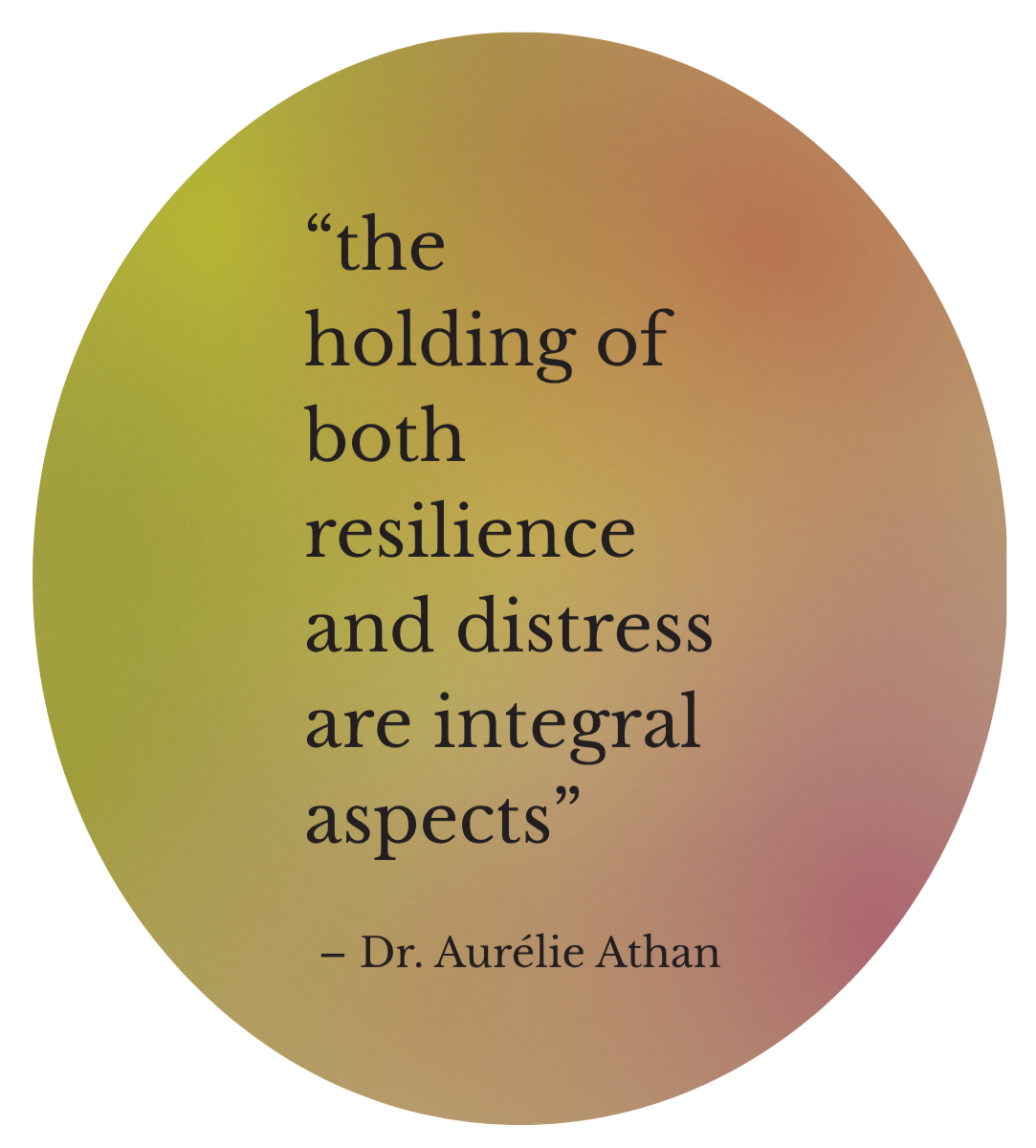
Belonging is the salve. Exchanging our stories brings us to new insights.
We do not try to prevent the leaves' departure from their beloved branches, nor the aches and pains of growing limbs.
We do not villainize the trees for — again — losing their beautiful leaves. Or children for developing feet that no longer fit into their shoes.
Somewhere along the way, we forgot that we too are wild, alive things — breaking and bending and stretching and returning — incapable of tending separate from the whole ecosystem.
At its core – matrescence is about the existential.
-
It’s in grief, in leaving, in disintegration, in all that we mourn as we embrace what has replaced the before.
It is not exclusive to a specific gender identity. It does not require physically growing a baby inside your body.
-
It's about the shifts in our access to choice, and how that changes us.
It’s the perspective suffering grants us in a culture divested from recognizing the validity of our pain - the pain it's caused.
-
None of our lives are meant to be lived in isolation. When all is well, belonging creates our riches.
In other seasons, belonging becomes a matter of survival. This changes how we engage in relationship entirely.

The U.S. maternal mortality crisis offers perhaps the most glaring example of the cost of isolating people at their most vulnerable.
Attachment was always about survival.
The world we're attempting to maneuver today is showing us the cost of building a society that functions in opposition to our evolutionary blueprint.
Our VisionIn hopes of capturing the lessons most encounter in their own journey of matrescence, we're sharing human stories as a proclamation:
the survival of our entire species rests on our ability to tolerate the discomfort of everything's continuation, to commune with it.
Matrescence Media is our way of exploring the thresholds of life, and we're offering a less literal, zoomed-out lens.
The way back is always on the way back to each other. This is how we return to our humanity.
Co-Founder & CEOPaige Green
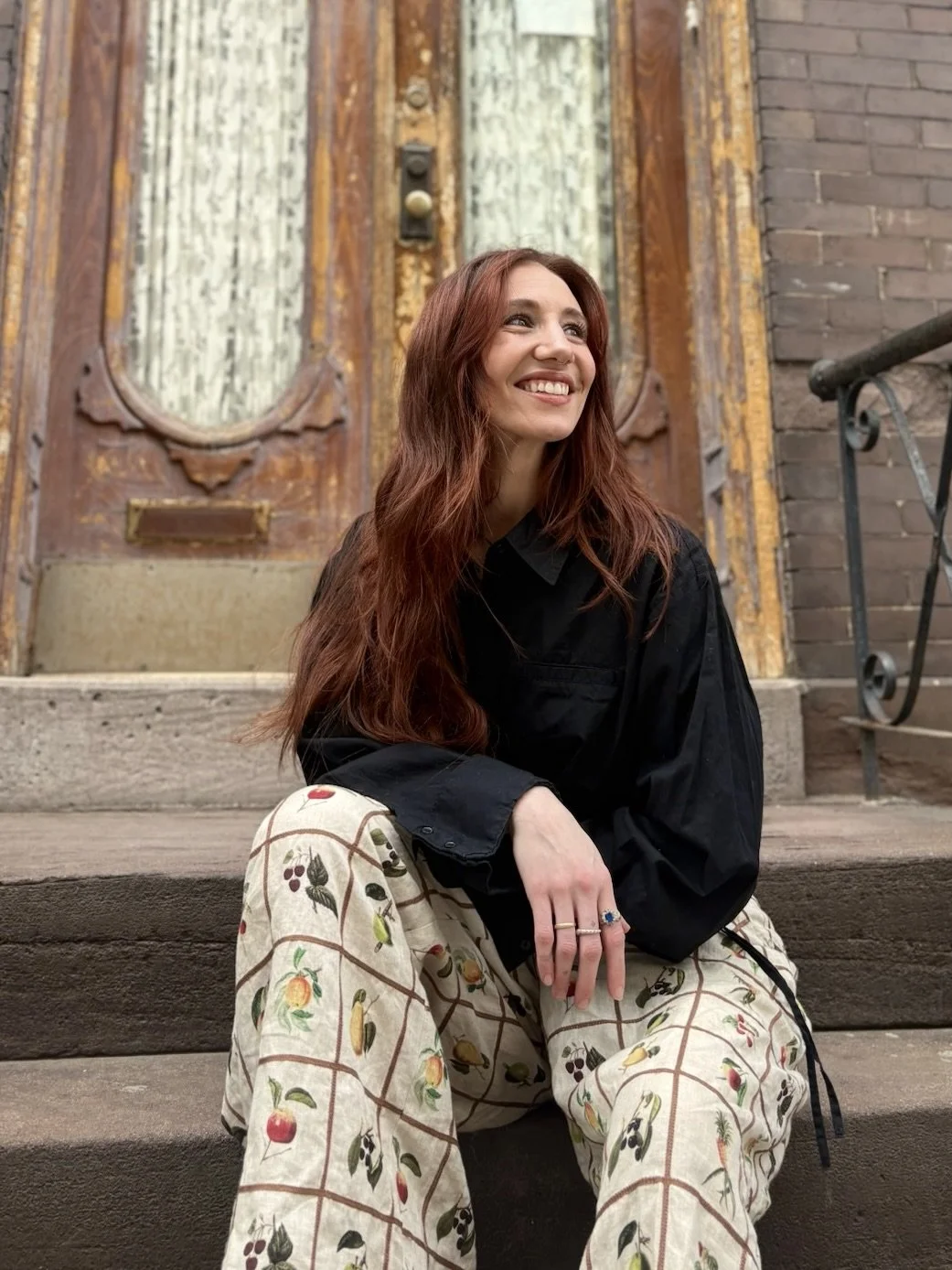
Paige Green (RN, IBCLC) is a leader, writer, speaker, strategist, clinician, birthworker, and organizer, who has spent the last 14 years working at the intersection of systems, power, perception, and human capacity. Her background spans tech, business, consulting, healthcare, public health, facilitation & teaching, DEIA & implicit bias, people leadership, dance, theater, music, and more.
Her work investigates the complexities of our lives & social dynamics, and distills what she finds into language that helps people understand what's happening beneath the surface — expanding what they understand to be possible and equipping them to make intentional, informed choices.
After 3.5 years in tech scaling a company from series A to unicorn status & a sales team into a multi-team user experience department, she's putting all the threads of her expertise together.
Dedicated to advancing Reproductive Justice (RJ) and equity aims — she is anchored by her certainty in the power of people-led movements.
Co-Founder & CVOElyse Schroeder

Elyse Schroeder is a birthworker, facilitator, educator, community leader, and solo mom who has spent the last decade supporting people through profound life transitions.
Her background spans HealthTech, business development, public health, urban gardening, community organizing, program development, theater & performance art, and much more. She is also a co-founder of East Bay Birth Collective and the founder of The East Bay Doula Hub.
Her work is centered on creating spaces where people can come as they are and be met — held in the full spectrum of their lived experiences, and supported in accessing their full capacity.
Believing deeply that collective care and interdependence are essential for societal wellbeing, she’s enacting a ripple effect of healing, resilience, and community-led change that extends outward into our families, partnerships, and broader systems.